


A damp basement is easy to ignore until the carpet is soaked, the walls are stained and the whole level smells musty. Basement leaks rarely fix themselves. Left alone, they can weaken the foundation, ruin finished spaces and create the perfect conditions for mold.
This guide explains what causes basement leaks, how to find where the water is coming from, the most common basement leak repair options and when it is time to bring in a professional.
Common Causes of Basement Leaks
Basements sit below ground, surrounded by soil that holds water. When that soil gets saturated, water looks for any path inside. The most common causes include:
Hydrostatic Pressure
After heavy rain or snowmelt, water builds up in the soil and presses against foundation walls and floors. That pressure pushes water through even tiny cracks and pores in the concrete.
Foundation Cracks
Concrete shrinks as it cures and shifts as soil settles. Over time, cracks form in walls and floors, giving water a direct route inside.
Poor Grading and Drainage
If the ground around your home slopes toward the house, rainwater flows straight to the foundation. Clogged gutters and short downspouts make it worse by dumping roof water right next to the walls.
Wall and Floor Joint Seepage
The seam where the basement wall meets the floor, called the cove joint, is a weak point. Water often seeps in along this line during wet weather.
Window Wells and Plumbing Leaks
Window wells without drains or covers can fill with water and leak through the window frame. Not every basement leak comes from outside, either. Leaking pipes, water heaters and washing machines can all send water across the floor.
How to Find Where Your Basement Is Leaking
Before you can fix a leak, you need to know where the water is coming from. A few simple steps help narrow it down:
- Track when it happens. Water after heavy rain points to outside sources. Water on dry days points to plumbing or condensation.
- Look for patterns. Check walls for damp spots, white chalky residue called efflorescence, rust marks and peeling paint.
- Try the foil test. Tape a square of aluminum foil to the wall for 24 to 48 hours. Moisture on the outside of the foil means condensation. Moisture on the wall side means water is coming through the concrete.
- Check outside. Walk around the house and look at gutters, downspouts, grading and window wells.
Basement Leak Repair Options
The right repair depends on the cause. Many homes need a combination of fixes.
Fixing Gutters, Downspouts and Grading
These are often the easiest and least expensive fixes. Clean gutters, extend downspouts at least 6 to 10 feet from the house and build up soil so it slopes away from the foundation.
Sealing Foundation Cracks
Small, non-structural cracks can be sealed by injecting epoxy or polyurethane from the inside. These materials fill the crack and block water from coming through.
Interior Waterproofing and Drainage
An interior drainage system collects water along the base of the walls and routes it to a sump pump, which pumps it outside. Waterproof coatings and vapor barriers on walls add another layer of protection.
Exterior Waterproofing
For serious leaks, contractors dig around the foundation, apply a waterproof membrane to the outside of the walls and install drain tile at the footing. It is more invasive and costly, but it stops water before it reaches the wall.
Repairing Window Wells and Plumbing
Adding drains and covers to window wells keeps them from filling with water. Plumbing leaks should be repaired by a licensed plumber as soon as they are found.
DIY Fixes vs. Professional Basement Leak Repair
Homeowners can handle simple tasks like cleaning gutters, extending downspouts, regrading soil and sealing small cracks. But some situations call for professional help:
- Cracks wider than about a quarter inch, or cracks that keep growing
- Bowing, bulging or leaning foundation walls
- Water coming in at several points or during every storm
- Standing water, soaked carpet or wet drywall
- Visible mold or a strong musty smell
Structural problems need a qualified foundation contractor. Once the leak is stopped, any water that already got in still needs to be dried and cleaned properly.
Repairing Water Damage After the Leak Is Fixed
Fixing the leak stops new water from coming in, but it does not dry out what is already wet. Moisture trapped in drywall, insulation, carpet padding and framing will keep causing damage if it is not removed.
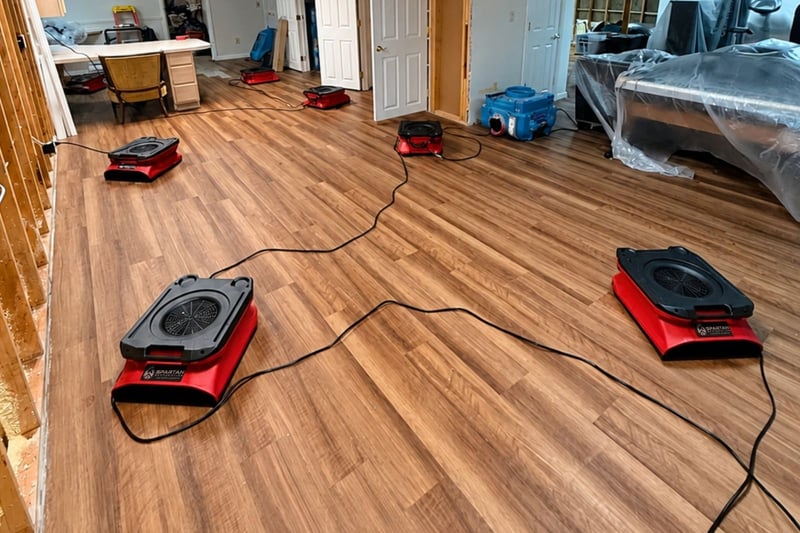
The EPA's guide to mold and moisture recommends drying wet materials within 24 to 48 hours to prevent mold growth. Professional drying uses dehumidifiers and air movers along with moisture meters to make sure every wet area is fully dry. Without it, homeowners often deal with mold after water damage weeks later, which may require professional mold remediation.
Damaged drywall, flooring and trim can then be replaced through repairs and reconstruction so your basement is usable again.
How to Prevent Future Basement Leaks
- Clean gutters at least twice a year, and more often if you have trees nearby.
- Keep downspouts extended and directed away from the house.
- Test your sump pump before the rainy season and after major storms.
- Run a dehumidifier to keep basement humidity between 30 and 50 percent.
- Inspect walls and floors every few months for new cracks or damp spots.
- Prepare for storms using Ready.gov's flood safety tips.
Understanding water intrusion and where it starts helps you stop small problems before they turn into major repairs.
How Spartan Restoration Can Help
Spartan Restoration helps Long Island homeowners recover from basement leaks and flooding. We extract standing water, dry walls and floors with professional equipment, treat mold and rebuild damaged areas. Our water damage restoration services are available 24 hours a day.
Conclusion
Basement leaks come from many sources, including hydrostatic pressure, foundation cracks, poor drainage and plumbing problems. Finding the cause is the first step, and the right repair depends on what you find. Just as important is drying out the water that already got in, so it does not lead to mold and rot.
If your basement is leaking or already has water damage, call Spartan Restoration at 631-250-1142 for a fast assessment.