

Flood Damage Restoration: First Steps and Flood Insurance
A flood is not the same as a burst pipe. Floodwater comes in from outside, it carries whatever it picked up on the way, and insurance treats it under a different policy. Long Island learned this the hard way during Superstorm Sandy in 2012, when storm surge filled basements and first floors along the South Shore. This guide covers what to do in the first hours, how flood damage restoration works, and what flood insurance does and does not pay for.
What Counts as a Flood
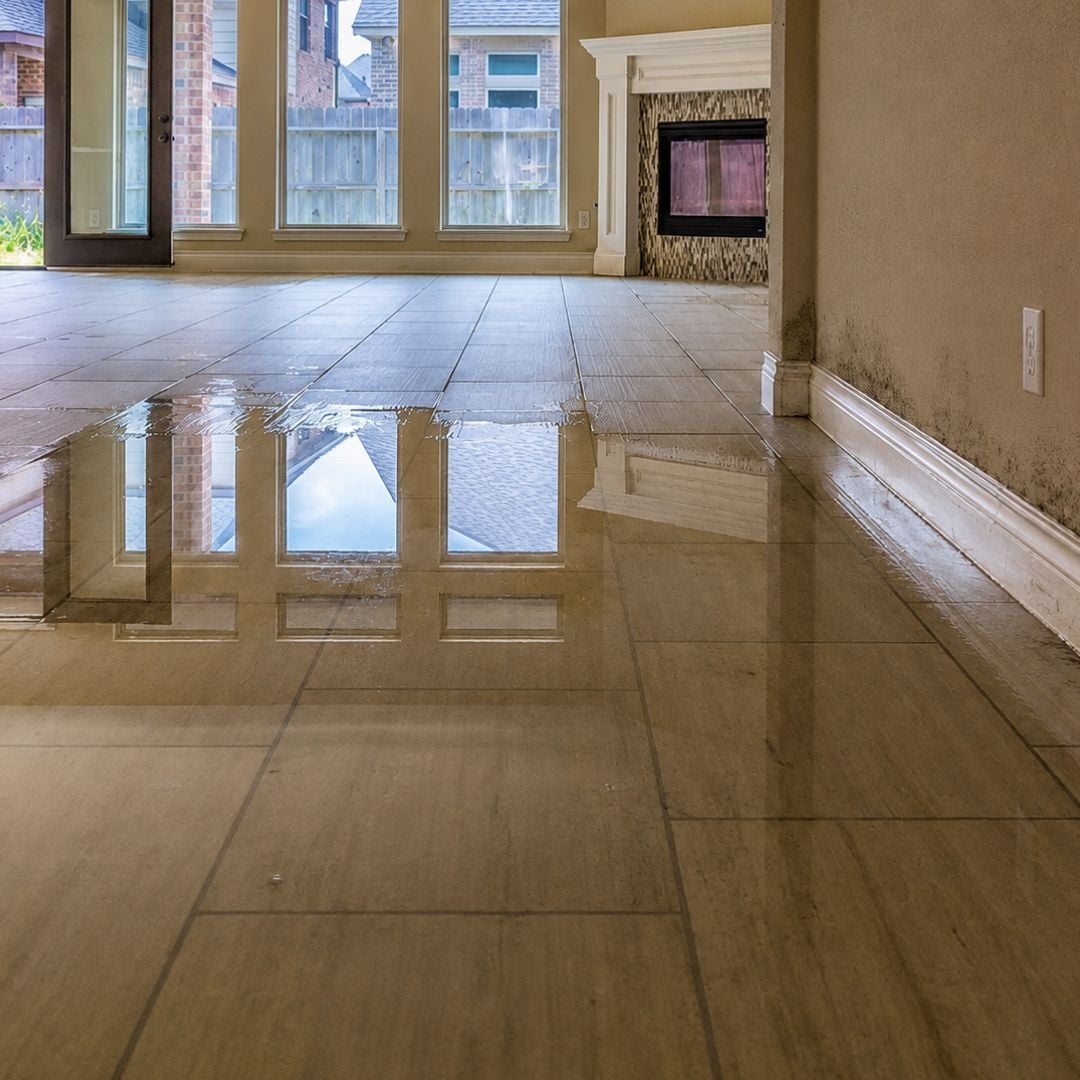
For insurance purposes, a flood has a specific meaning. The National Flood Insurance Program (NFIP) defines it as a general and temporary condition where two or more acres of normally dry land, or two or more properties (at least one of them yours), are partly or completely covered by water. That water can come from overflowing inland or tidal waters, from an unusual and rapid buildup of surface water, or from mudflow.
In practice, that covers storm surge, tidal flooding, overflowing creeks and rivers, and heavy rain that turns streets into rivers. It does not cover a washing machine hose that fails or a pipe that bursts inside your walls. Those are water damage claims under a homeowners policy, which is why the source of the water matters from the first phone call.
Safety Comes First
Floodwater is dangerous in ways that are easy to underestimate. Before you go back in or start cleaning up:
- Stay out of standing water until the power is off. If water reached outlets, the electrical panel or appliances, have the utility or an electrician shut off power before anyone walks through it.
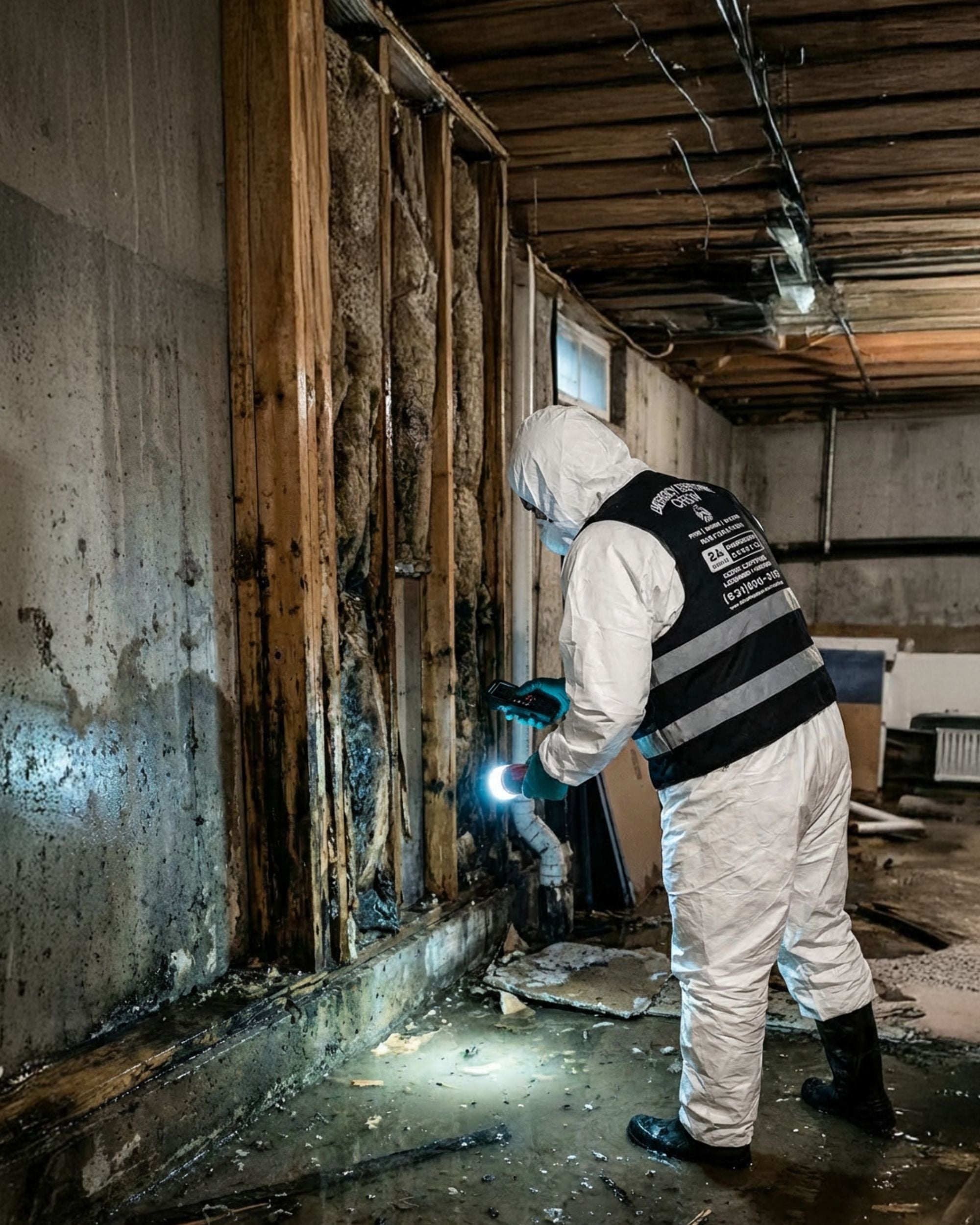
- Treat all floodwater as contaminated. The restoration industry classes floodwater from outside as Category 3, or black water, because it can carry sewage, chemicals, fuel and bacteria. Wear rubber boots and gloves, and keep children and pets away.
- Watch for structural damage. Sagging ceilings, cracked foundations and buckled floors are reasons to stay out until the building is checked.
- Smell for gas. If you smell gas, leave and call the gas company from outside.
The First 24 to 48 Hours
What happens in the first two days decides how much of the house can be saved. Mold can begin growing on wet drywall, carpet pad and wood within 24 to 48 hours, so drying has to start fast.
- Photograph and video everything before anything is moved or thrown out, including the water line on walls.
- Call your insurance company and, if you have one, your flood insurer. Get a claim number.
- Keep samples of carpet and other damaged materials if your adjuster asks for them, and keep receipts for anything you buy.
- Call a restoration company to extract the water and start drying. Pumping out a basement too quickly while the ground outside is still saturated can stress foundation walls, so it is worth having professionals set the pace.
Our guide to what to do in the first 24 hours after water damage goes through these steps in more detail.
How Professional Flood Damage Restoration Works
Flood cleanup follows the same basic order on almost every job, whether it is a single basement or a whole first floor.
1. Inspection and Moisture Mapping
The crew checks for safety hazards, finds how far the water traveled, and uses moisture meters to map wet areas behind walls and under floors. Water wicks upward in drywall and travels along framing, so the wet area is usually larger than the visible water line.
2. Water Extraction
Pumps and truck-mounted or portable extractors remove standing water and as much water as possible from carpet and subfloors. The faster the bulk water is out, the faster everything else dries.
3. Removing What Cannot Be Saved
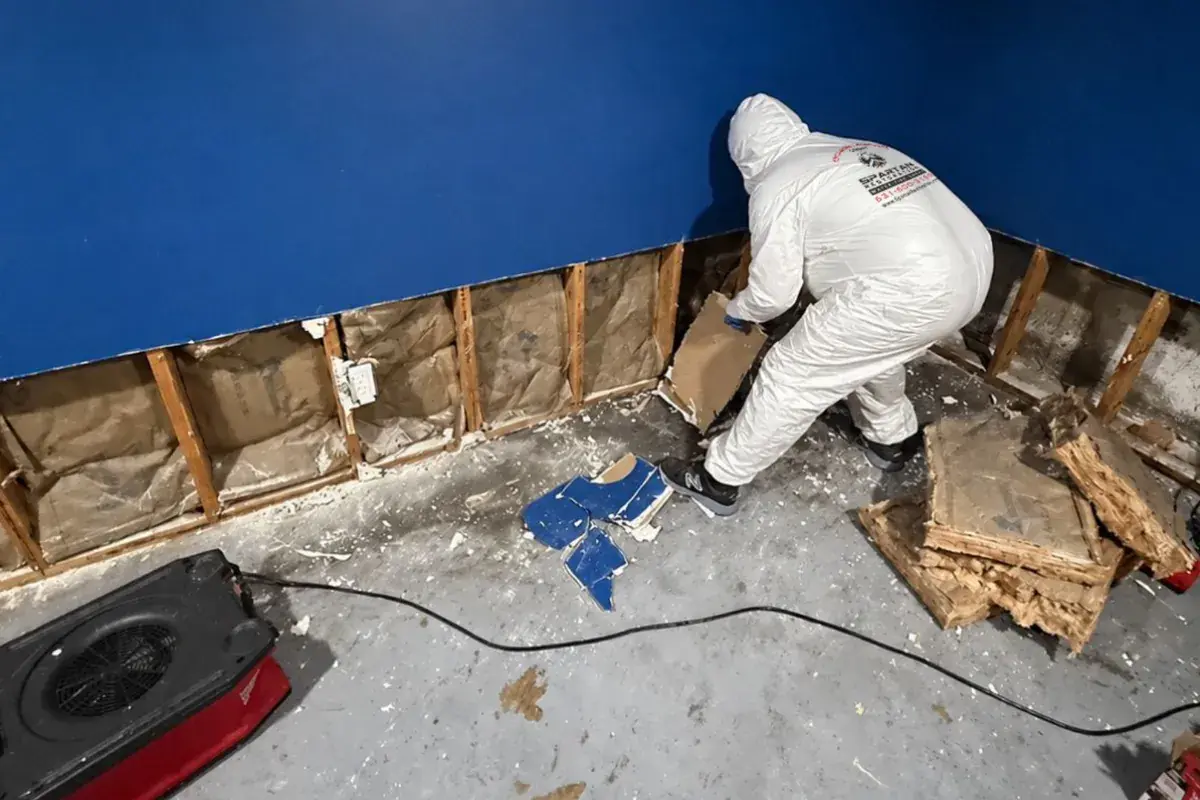
Because floodwater is contaminated, porous materials it soaked are usually removed rather than cleaned. That typically means carpet and pad, insulation, and the lower part of the drywall. Crews often make a straight "flood cut" a foot or two above the highest water line so the wall cavity can dry and be cleaned.
4. Cleaning and Disinfecting
Remaining surfaces, framing and concrete are cleaned and treated with an antimicrobial so bacteria and mold do not take hold while the structure dries.
5. Drying and Dehumidifying
Air movers and dehumidifiers run until moisture readings in the framing, subfloor and concrete reach normal levels. Most structures take several days. Crews take readings daily and adjust equipment as areas dry.
6. Rebuilding
Once everything is dry and documented, drywall, insulation, flooring and trim go back in. Closing up walls before the framing is dry is one of the most common causes of mold after a flood.
What Flood Insurance Covers
Standard homeowners policies do not cover flood. Flood coverage comes from a separate policy, most often through the NFIP, and it has rules that surprise a lot of homeowners:
- Coverage limits. NFIP policies cover up to $250,000 for a single-family home's building and up to $100,000 for contents. Private flood policies can offer higher limits.
- Waiting period. A new NFIP policy usually takes 30 days to take effect, with a few exceptions, such as a policy bought because a lender requires it at closing. Buying insurance when a storm is already in the forecast is usually too late.
- Basement limits. In NFIP terms, a basement is any area with a floor below ground level on all sides. Coverage there is limited to things like the furnace, water heater, washer and dryer, electrical panel, pumps and cleanup. Finished walls, floors, ceilings and most belongings in a finished basement are not covered.
- Proof of loss. NFIP claims generally need a signed proof of loss within 60 days of the flood, so start documenting early and stay in touch with your adjuster.
You can check your flood zone on FEMA's Flood Map Service Center. Being outside a high-risk zone does not mean a home cannot flood, it means the lender is not required to make you insure it.
Rebuilding After a Major Flood
If repairs after a flood will cost 50 percent or more of the building's market value before the flood, local officials can declare it substantially damaged. A substantially damaged home in a high-risk flood zone has to be brought up to current floodplain rules when it is repaired, which can mean raising the house or its utilities above the expected flood level. Land value is not counted in that calculation, and the decision is made by your town or village building department, not by FEMA.
NFIP policies include Increased Cost of Compliance coverage for this situation. It pays up to $30,000 toward elevating, floodproofing, relocating or demolishing a substantially damaged building, on top of the regular building claim. Ask your adjuster about it as soon as the building department issues a substantial damage notice, because the request has a deadline.
Even when a house is not substantially damaged, a flood is a good time to move the furnace, water heater and electrical panel out of the basement or up off the floor. FEMA calls this elevating utilities, and it is one of the cheapest ways to cut the cost of the next flood.
Flood Risk on Long Island
Long Island's flood risk is concentrated where the land meets the bays. During Sandy, storm surge flooded homes south of Merrick Road in Massapequa, filled low streets in the Five Towns and pushed saltwater into basements across the South Shore. Nor'easters and very high tides still bring water into those same streets. Inland, heavy rain is the bigger threat: overnight on August 18 to 19, 2024, about 10 inches of rain fell on Smithtown, the Stump Pond dam at Blydenburgh County Park failed and floodwater covered Jericho Turnpike.
The North Shore floods too. FEMA records show 1,324 flood insurance claims in the village of Bayville from 1978 through 2023, and 459 of them came from Sandy alone. Bayville sits between Long Island Sound and Oyster Bay Harbor, so its low streets can take water from both sides in the same storm.
Our local pages cover what flooding looks like in specific towns, including storm damage restoration in Massapequa, water damage restoration in Bayville, water damage restoration in Hewlett Harbor and storm damage restoration in Smithtown.
Frequently Asked Questions
Does homeowners insurance cover flood damage?
No. Standard homeowners policies exclude flood. Water that comes in from outside, such as storm surge, tidal flooding or rising water from heavy rain, needs a separate flood policy through the NFIP or a private insurer. Wind damage from the same storm, such as a torn roof, is usually a homeowners claim.
How long does flood damage restoration take?
Extraction and removal of soaked materials usually happen in the first one to two days. Drying typically takes several more days, depending on how much water there was and what the house is built from. Rebuilding comes after that and depends on how much had to be removed.
Can I clean up a flooded basement myself?
You can remove belongings and start airing out a small amount of clean water. Floodwater from outside is contaminated, though, and wet drywall, insulation and carpet usually have to come out. Without moisture meters it is hard to know when the framing is dry, and closing walls too early leads to mold.
Get Help After a Flood
Floodwater does the most damage in the first two days. The sooner extraction and drying start, the more of the house you keep.
- Our water damage restoration services team extracts water, removes what cannot be saved and dries the structure.
- If the flood came with wind or tree damage, see our storm damage restoration services.
- If water sat for more than a day or two, read about our mold remediation services.
Spartan Restoration takes calls 24 hours a day. For more on basements specifically, see our guide to flooded basement cleanup.