

After a fire, the black film coating your walls, ceilings and furniture is not just dirt. It is soot, and it can be one of the most damaging and hard-to-remove results of a fire. Even a small kitchen fire, a furnace malfunction or a candle burning too long can leave soot behind.
So, what is soot, and why does it matter? This guide explains how soot forms, the health risks it creates, how it damages your home and what to do when you find it.
What Is Soot?
Soot is a fine black or brown powder made mostly of carbon. It forms when materials such as wood, paper, plastic, oil or natural gas do not burn completely. Instead of turning fully into heat and gas, part of the fuel breaks apart into tiny particles that float in the smoke and settle on nearby surfaces.
Soot particles are extremely small. Many are less than 2.5 microns wide, about 30 times smaller than a human hair. That small size lets soot travel through a home, slip into cracks and pass deep into the lungs when people breathe it in.
What Is Soot Made Of?
Soot is mostly carbon, but it also carries whatever was burning. A house fire can create soot that contains acids, metals, chemicals from burned plastics and other compounds. That mix is why soot from a fire is far more harmful than the dust you sweep up every week.
Soot vs. Smoke
Smoke is the cloud of gases and particles released during burning. Soot is the solid residue those particles leave behind once they settle. In other words, smoke moves and soot stays. Both are part of smoke damage, but soot is what you see and touch on surfaces long after the fire is out.
Common Sources of Soot in the Home
A house fire is the most obvious source, but soot can build up from everyday sources too:
- House fires. Even a fire contained to one room spreads soot throughout the home.
- Furnace malfunctions. A furnace puffback can blast soot through the ductwork into every room in seconds.
- Fireplaces and wood stoves. Poor ventilation or a dirty chimney can push soot back into the living space.
- Candles. Scented candles, especially with long wicks, leave black streaks on walls and ceilings over time.
- Kitchen cooking. Burned food and grease fires create sticky, oily soot.
- Oil or gas appliances. Water heaters, boilers and space heaters that are not burning properly release soot.
Types of Soot
Not all soot behaves the same way. The type depends on what burned and how hot the fire was, and each one needs a different cleaning approach.
- Dry soot. Comes from fast, hot fires burning paper and wood. It is powdery and easier to remove, but it smears if wiped.
- Wet soot. Comes from slow, smoldering fires burning plastics and rubber. It is sticky, smeary and has a strong odor.
- Oily soot. Comes from burning oil or fuel, often from a furnace puffback. It is thick and hard to clean.
- Protein residue. Comes from burned food. It is almost invisible but leaves a yellowish film and a very strong smell.
Health Risks of Soot Exposure
Soot is considered fine particulate matter. According to the EPA's guide to particulate matter, these tiny particles can get deep into the lungs and even into the bloodstream. That is why soot exposure is a real health concern, not just a cleaning problem.
Short-Term Effects
Breathing soot can cause coughing, wheezing, sneezing, sore throat, eye irritation and headaches. People with asthma or allergies may notice their symptoms get worse quickly. Soot on the skin can also cause irritation and rashes.
Long-Term Effects
Repeated or long exposure to fine particles has been linked to heart and lung problems. Children, older adults, pregnant women and anyone with heart or lung conditions are most at risk. If your home has visible soot after a fire, it is safest to limit time inside until it is properly cleaned.
How Soot Damages Your Home
Soot is acidic and it does not stay still. The longer it sits, the more damage it causes.
Walls, Ceilings and Paint
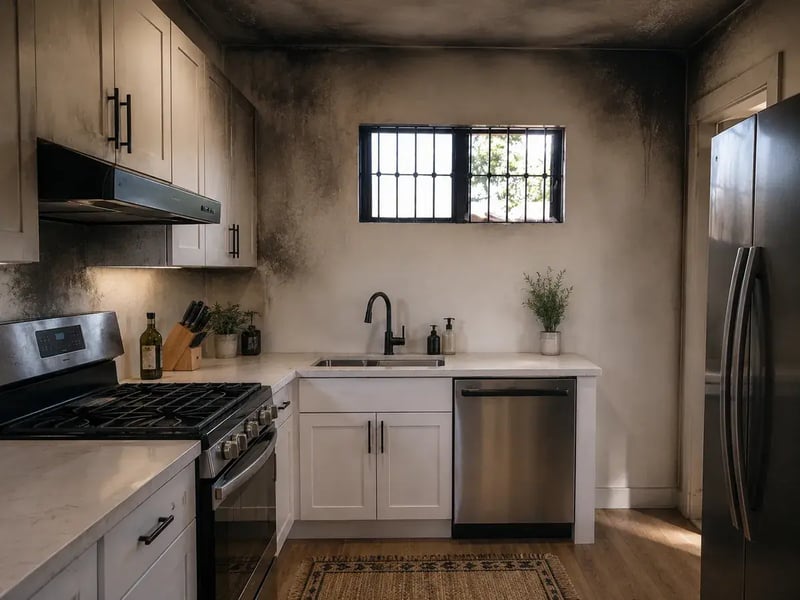
Soot settles on walls and ceilings, especially in corners and on cooler surfaces. Within days, its acids can permanently stain paint and wallpaper, which then needs sealing and repainting.
Metal, Electronics and Appliances
The acids in soot corrode metal. Fixtures, door hardware and appliances can pit and discolor. Soot that gets inside computers, TVs and other electronics can damage circuit boards and cause them to fail weeks after the fire.
Fabrics, Carpet and Furniture
Soot works deep into upholstery, carpet, clothing and curtains. It can permanently discolor fabrics and hold onto smoke odor. Many items can be saved, but only with the right cleaning methods and odor removal services.
HVAC Systems and Ductwork
When the heating or cooling system runs after a fire, it pulls soot into the ductwork and spreads it to every room. Professional air duct cleaning removes soot from the system so it does not keep recontaminating the house.
Signs of Soot Damage You Might Miss
Some soot is obvious, but much of it hides in places homeowners do not check. Look for:
- Gray or black shadows around outlets, light switches and ceiling vents
- Dark lines on carpet along walls and under doors, often called filtration soiling
- A smoky smell that comes back when the heat or air conditioning turns on
- Black webs in corners that look like cobwebs but smear when touched
- Yellow or brown film on cabinets, windows and appliances
How to Handle Soot Safely
If you find soot in your home, a few simple steps help prevent more damage:
- Do not wipe it with water or regular cleaners. This smears soot deeper into surfaces and can set stains permanently.
- Turn off the HVAC system to keep soot from spreading through the ducts.
- Protect your lungs. Wear an N95 mask and gloves if you need to enter heavily affected areas.
- Limit foot traffic to avoid grinding soot into carpets.
- Remove soot-covered food and medicine. Throw away anything that was exposed, including items in open containers.
For light soot from a candle, careful cleaning with a dry soot sponge may be enough. Our guide to cleaning up soot without causing more damage walks through the right techniques. For soot left by a fire or puffback, professional help is the safer choice.
Why Professional Soot Removal Matters
Soot removal is more than cleaning. Professionals identify the type of soot, choose the right cleaning method for each surface, clean the HVAC system and remove odor at the source instead of covering it up. They also use HEPA air scrubbers to capture fine particles from the air while they work, which protects your family's health.
Professional soot removal also saves money. Items and surfaces cleaned quickly and correctly are far less likely to need replacing.
How Spartan Restoration Can Help
Spartan Restoration provides soot and smoke damage cleanup for homes and businesses across Long Island. Our team cleans walls, ceilings, contents and ductwork, removes lingering odors and restores your property to a safe, healthy condition. We respond 24 hours a day.
Conclusion
Soot is a fine, acidic residue that forms when materials do not burn completely. It can irritate your lungs, stain your walls, corrode metal and electronics and spread through your HVAC system. The sooner it is cleaned the right way, the more you can save.
If you are dealing with soot after a fire or furnace puffback, call Spartan Restoration at 631-250-1142 to schedule an assessment.