
Grease Fire: How to Put It Out Safely and Clean Up the Damage
A grease fire can start in seconds. A pan of oil gets too hot, a splatter hits the burner and suddenly there are flames on the stove. What you do in the next few moments decides whether it stays a scary moment or turns into a house fire.
This guide explains what causes a grease fire, how to put one out safely, the mistakes that make it worse and how to clean up the smoke, soot and grease residue left behind.
What Causes a Grease Fire?
Cooking oil and fat do not need a spark to ignite. Once oil gets hot enough, it reaches its smoke point, then its flash point and finally its auto-ignition point, where it bursts into flames on its own. Most cooking oils can ignite somewhere around 400 to 700 degrees Fahrenheit, and a pan on high heat can get there faster than most people expect.
According to the National Fire Protection Association, cooking is the leading cause of home fires and home fire injuries, and unattended cooking is the biggest factor. Common triggers include:
- Leaving a pan of oil on the burner while you step away
- Frying on high heat instead of medium
- Grease buildup on the stovetop, range hood or oven
- Dropping wet or frozen food into hot oil, which causes splattering
- Towels, oven mitts or paper towels sitting too close to the burner
How to Put Out a Grease Fire Safely
If the fire is small and contained to the pan, you may be able to put it out. Stay calm and follow these steps:
1. Turn Off the Heat
Shut off the burner right away. Do not try to move the pan. Carrying a burning pan can spill flaming oil onto you, the floor or the cabinets.
2. Cover the Pan
Slide a metal lid or a baking sheet over the pan to cut off the oxygen. Leave it covered until the pan has cooled completely. Lifting the lid too early can let the fire reignite. Avoid glass lids, which can shatter from the heat.
3. Smother Small Flames With Baking Soda or Salt
For a very small fire, pour a large amount of baking soda or salt over the flames. Never use flour, sugar or baking powder. Flour can actually explode into a fireball when it hits flames.
4. Use the Right Fire Extinguisher
If the fire is still burning, use a Class K extinguisher (made for kitchen grease fires) or a Class B or multipurpose ABC extinguisher. Aim at the base of the fire and sweep side to side. Keep one extinguisher in or near your kitchen and make sure everyone at home knows how to use it.
5. Get Out and Call 911
If the flames spread beyond the pan, reach the cabinets or the fire does not go out quickly, leave the house, close the door behind you and call 911 from outside. No pan or kitchen is worth the risk.
What Never to Do During a Grease Fire
- Never throw water on it. Water sinks below the oil, instantly turns to steam and blasts burning grease into the air. This can turn a small pan fire into a kitchen fire in a second.
- Never carry the pan outside or to the sink. Moving it spreads burning oil and risks serious burns.
- Never swat at it with a towel. This fans the flames and can set the towel on fire.
- Never use flour or other cooking powders. Only baking soda or salt are safe for small fires.
What a Grease Fire Leaves Behind
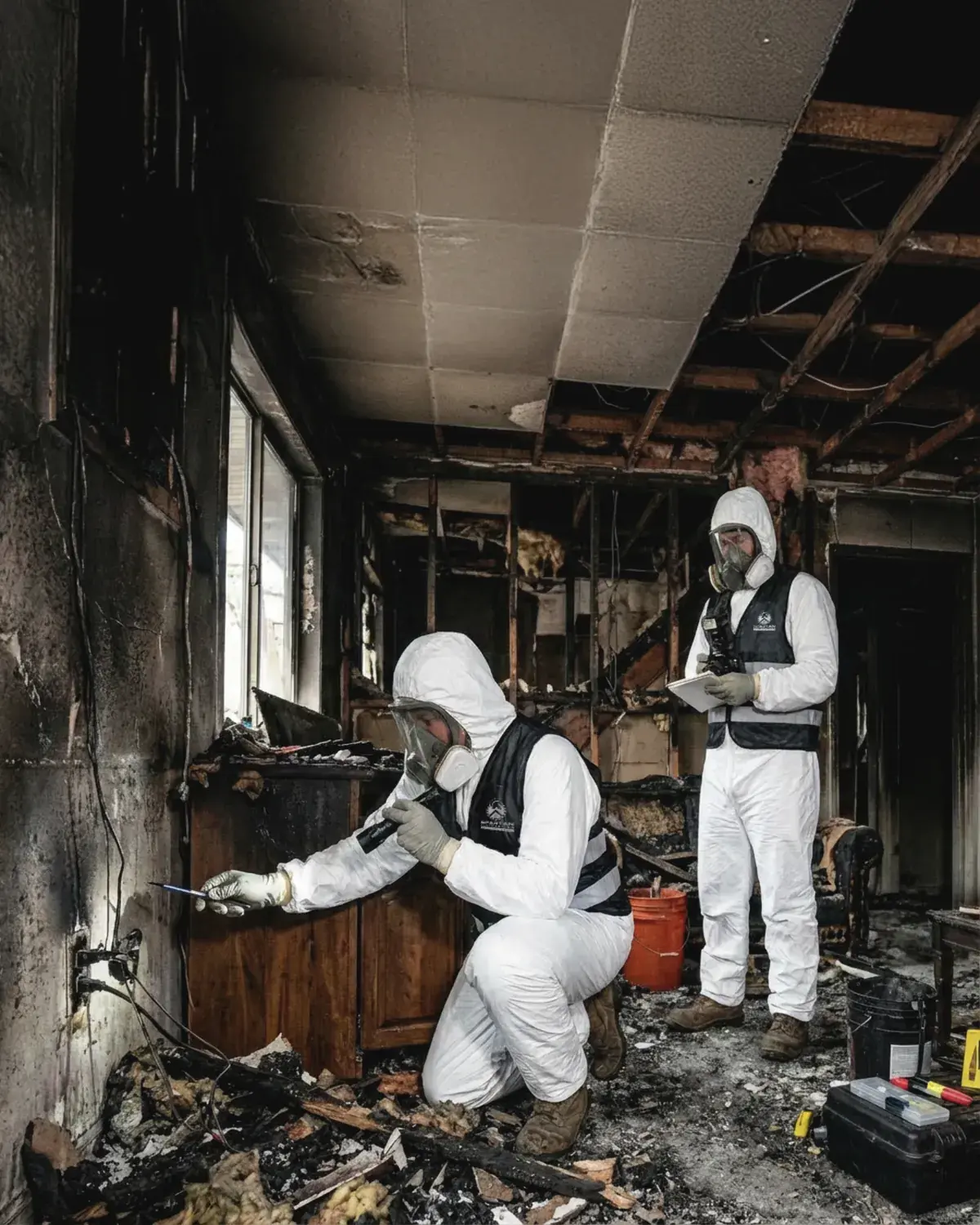
Even when a grease fire is put out fast, it often leaves more damage than you can see. Grease fires produce thick, oily smoke that clings to every surface. Typical damage includes:
- Greasy soot on cabinets, ceilings, walls and appliances
- Heat damage to the range hood, backsplash, countertops and nearby cabinets
- Smoke odor that spreads into other rooms and the HVAC system
- Discoloration on painted surfaces, grout and plastic
- Residue from fire extinguishers, which is corrosive and needs careful cleanup
Protein and grease residue is one of the hardest types of smoke damage to clean. It is often nearly invisible but carries a strong, lingering smell.
How to Clean Up After a Small Grease Fire
For a small, contained fire with light residue, you can start the cleanup yourself once everything has cooled:
- Ventilate the kitchen. Open windows and run fans to push smoky air outside.
- Remove the burned pan and food. Throw out any food that was near the fire or exposed to smoke.
- Degrease first. Use a dish soap or degreaser solution with warm water on hard surfaces. Work from top to bottom.
- Clean soot gently. Wiping soot with a wet cloth can smear it deeper into surfaces. A dry chemical sponge often works better on walls and ceilings.
- Wash fabrics. Curtains, dish towels and rugs near the stove usually need to be washed or professionally cleaned.
- Check the range hood. Clean or replace the filter, since it likely trapped grease and smoke.
Our guide on how to clean up soot without causing more damage explains which cleaning methods are safe for different surfaces.
When to Call a Professional
Bigger grease fires usually need professional help. Call a fire restoration company if:
- Smoke or soot spread beyond the kitchen
- Cabinets, walls or the ceiling were scorched or blistered
- The smoke smell is still strong after you cleaned
- Electrical wiring, outlets or appliances were near the flames
- The fire department responded and used water or extinguishers
Professionals use specialized cleaning agents, HEPA vacuums, thermal fogging and air scrubbers to remove residue and odor that household cleaners leave behind.
How to Prevent Grease Fires
- Stay in the kitchen while frying, grilling or broiling.
- Heat oil slowly over medium heat and watch for smoke.
- Keep a lid and baking soda within reach of the stove.
- Clean grease from the stovetop, oven and range hood regularly.
- Pat food dry before adding it to hot oil.
- Keep towels, paper and pot holders away from burners.
- Test your smoke alarms every month, as recommended by the U.S. Fire Administration.
How Spartan Restoration Can Help
Spartan Restoration helps Long Island homeowners recover from kitchen and grease fires of every size. We remove greasy soot, clean cabinets and surfaces, eliminate smoke odor and repair heat-damaged areas. Our fire damage restoration services and smoke and soot removal teams are available 24 hours a day.
Conclusion
A grease fire is dangerous, but knowing what to do makes all the difference. Turn off the heat, cover the pan, never use water and get out if the fire spreads. Once the flames are out, clean up the grease and soot quickly before the residue and smell settle in.
If a grease fire left your kitchen with smoke or fire damage, call Spartan Restoration at 631-250-1142 for a fast assessment.