
How to Choose a Water Damage Restoration Company
After a burst pipe or a flood, you often have to pick a restoration company while water is still spreading across the floor. That company shapes what gets torn out, how the drying is recorded and what your insurer sees. This guide lists the questions to ask a water damage restoration company before you sign anything, and what good answers sound like.
Start With What the Company Does First
A search for "water damage cleanup near me", "water damage restoration service near me" or "flood restoration companies near me" brings up a long page of ads and listings. The quickest way to tell one water damage restoration company from another is to ask what happens on the first visit. A clear answer covers these steps:
- Inspection. Someone checks for electrical and structural hazards and uses moisture meters to find how far the water traveled behind walls and under floors.
- The category of water. Clean water from a supply line is handled differently from sewage or floodwater. The industry standard has the restorer make a preliminary determination of the category of water, and that sets the scope of work.
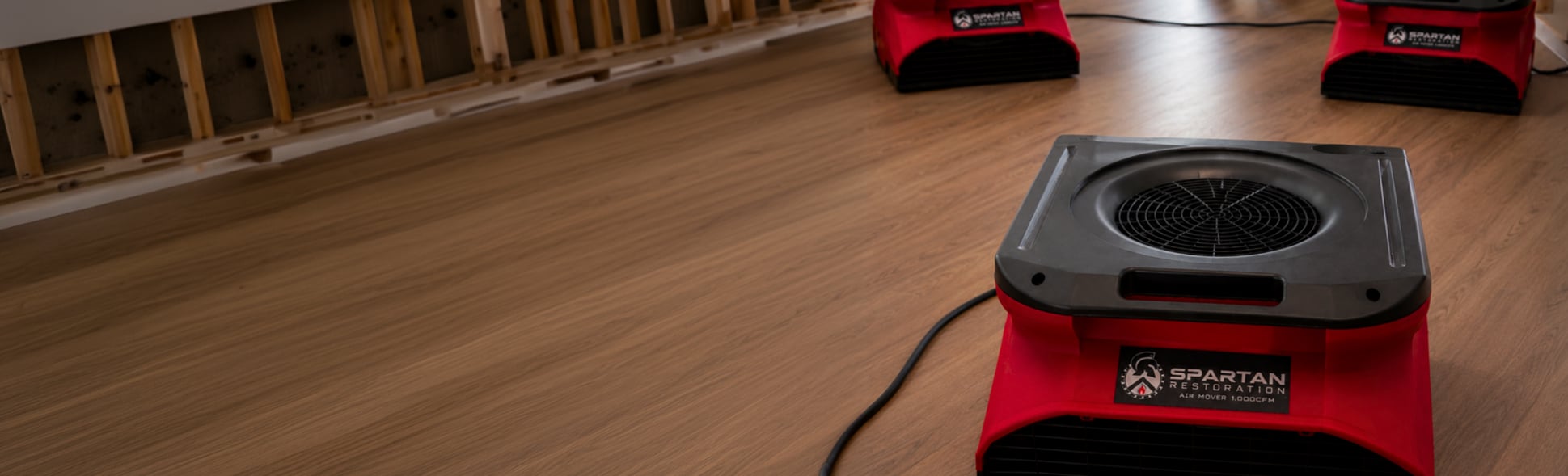
- Extraction and drying. Standing water comes out, materials that cannot be dried are removed, and fans and dehumidifiers go in.
Also ask who stops the leak. The same standard says correcting the water source is the property owner's job, so you may need a plumber or roofer as well.
Speed matters because the EPA says water-damaged areas and items should be dried within 24 to 48 hours to prevent mold growth. Our guide to what to do in the first 24 hours after water damage covers what you can do while you wait. For local information, see our pages on water damage restoration in Islip, water damage restoration in Smithtown, water damage restoration in Hempstead and water damage restoration in Queens.
The New York State Department of Financial Services (DFS) advises making only the repairs needed to prevent further damage and holding off on permanent repairs until the insurer has inspected.
Ask How Drying Is Measured and Recorded
Wet framing and subfloors can feel dry long before they are. The EPA notes that moisture meters can help measure the moisture content of building materials after water damage and monitor drying. Ask the company:
- Will you map the wet areas and mark where each reading is taken?
- What is the drying goal? A common target is the reading from the same material in a part of the house the water never reached.
- How often will someone come back to take readings and adjust equipment?
- Will I get copies of the readings, the drying log and the photos?
- Who decides the job is dry, and will that be in writing before walls are closed?
Those records help your claim, because an adjuster can see why equipment ran as long as it did. They also protect the house: closing a wall over damp framing traps the moisture inside, and mold can follow. Our post on moisture detection and moisture mapping explains the tools, and how long water damage restoration takes covers typical drying times.
What the IICRC S500 Standard Is
The main industry standard for this work is the ANSI/IICRC S500 Standard for Professional Water Damage Restoration, published by the Institute of Inspection, Cleaning and Restoration Certification. The current fifth edition came out in 2021, and a new committee has started revising it. The IICRC says it describes the procedures and precautions for restoring water-damaged homes and other buildings.
The S500 says it was written primarily for restoration companies and workers, and it lists project documentation as part of the job. In practice, that means moisture readings taken, written down and compared to a dry standard. It is fair to ask a company whether it follows S500 and how its drying records show that.
Get the Scope and Estimate in Writing
New York law requires a written contract for home improvement work that costs more than $500. According to the New York Attorney General, the contract must include:
- The contractor's name, address and phone number.
- Approximate start and completion dates.
- A description of the work and materials, and the agreed price.
- A notice that you have three business days to cancel, unless during an emergency you waive that right in writing.
- A notice that payments made before the work is finished must go into an escrow account.
After a leak or flood, a company you called may ask you to waive the cancellation right so extraction can start. The waiver must be in your own handwriting, dated and signed, and describe the emergency. Limit it to the emergency work.
When you compare restoration services, water damage estimates should break the work out line by line: what is being removed, which rooms are being dried, what equipment is running and for how long. A vague line such as "mitigation, full house" makes it hard to compare companies or explain the bill to an adjuster.
Suffolk County Consumer Affairs suggests getting three written estimates. That is hard to do with water on the floor, but it is practical for the rebuild. DFS also notes that you can get an estimate from your own contractor to compare with the insurance company's.
Check the License and Insurance
New York State does not license home improvement contractors, but some counties do. The Attorney General's guide to contractors and home maintenance lists the places where home improvement contractors must be licensed, including New York City and Suffolk, Nassau, Westchester, Putnam and Rockland counties. State law defines home improvement to include repairs, and the county and city rules define it broadly too, so the rebuild after water damage will usually need a licensed contractor.
- Suffolk County. The county code makes it unlawful to work as a home improvement contractor without a license from Suffolk County Consumer Affairs. You can check a contractor with the office or its online license search, and the county publishes a "Wall of Shame" of people caught working without a valid license.
- Nassau County. Contractors who remodel residential homes need a license from Nassau County Consumer Affairs. Its online search shows each licensed contractor's insurance information, and a contractor who is not listed is not currently licensed. Subcontractors, other than plumbers and electricians, need their own Nassau license.
- New York City. The Department of Consumer and Worker Protection (DCWP) issues a Home Improvement Contractor license for construction, repair and remodeling on residential property.
Both counties say the contract should show the license number. Both also run restitution funds, but they pay only toward unpaid court judgments or awards against licensed contractors, and you must file a complaint with Consumer Affairs first.
The Attorney General also advises asking for proof of insurance, and Suffolk warns that an unlicensed contractor may not carry liability insurance. Ask for a certificate of insurance showing general liability and workers' compensation, with dates that cover the job. You can look up a company's workers' compensation coverage by name with the New York State Workers' Compensation Board's employer coverage search. A sole proprietor with no employees is not required to carry it.
Find Out Who Does the Rebuild
Some companies only extract water, remove damaged materials and dry the structure. Others also replace drywall, flooring and trim, and some hand that work to subcontractors. Ask:
- Will your own crew do the repairs, or a subcontractor? If a subcontractor, is it licensed in my county and insured?
- Who is my contact once drying ends?
- Will the final moisture readings go to whoever closes the walls?
If the house was built before 1978, ask about lead paint. Cutting out wet drywall disturbs painted surfaces, and the EPA generally requires anyone paid to disturb painted surfaces in a pre-1978 home to be certified under its Renovation, Repair and Painting rule. Spartan Restoration is an EPA Lead-Safe Certified Firm.
Payment, Your Insurer and Public Adjusters
Coverage varies by policy, but a few points apply to most claims:
- Document first. DFS advises photographing or filming losses before cleaning anything up.
- Get approval for permanent work. The Attorney General warns against starting permanent or substantial work before your claims adjuster approves it.
- Expect your lender on the check. DFS notes that a mortgage lender may be named on insurance checks, so talk to your bank early.
- Do not pay in full up front. Keep any deposit small and tie payments to finished stages. The contractor must tell you within five days where your deposit is held, or show proof of a bond.
If you want someone to negotiate the claim for you, New York law allows a public adjuster licensed by DFS or a New York attorney, with narrow exceptions for insurance brokers. According to DFS, the law caps public adjuster fees at 12.5 percent of the recovery, and you can cancel the agreement without penalty until midnight of the third business day after signing. Its page on adjusters, appraisers and umpires explains how to find one.
Before you sign any form that lets a company deal with your insurer or collect payment from it, ask what it covers, and keep a copy.
Red Flags After a Big Storm
DFS warns that scam artists often show up after disasters, including criminals who pretend to be contractors to steal personal financial information. The Attorney General adds that non-local "storm chasers" can be hard to track down if their work goes wrong. Be careful with anyone who:
- Knocks on your door uninvited, or says they have materials left over from another job.
- Pushes you to sign today.
- Wants cash, a wire transfer or the full price before work starts.
- Cannot give you a county or city license number, or a physical address you can verify.
- Offers to "handle the claim" without being a licensed public adjuster or attorney.
Frequently Asked Questions
Do I need three estimates before water extraction starts?
No. DFS advises making the repairs needed to prevent further damage, and the EPA says wet areas should be dried within 24 to 48 hours. Tell your insurer what is being done, keep the paperwork and photos, and compare estimates for the rebuild.
Can the restoration company negotiate with my insurance company for me?
It can send your adjuster its estimate, photos and moisture readings. Negotiating the claim on your behalf is work for a DFS-licensed public adjuster or a New York attorney.
How do I know when the house is dry?
Ask for the final moisture readings in writing. They should meet the drying goal before any walls or floors are closed.
Get Help With Water Damage
These questions apply to any company you call. Get the answers in writing and keep copies.
- Our water damage restoration services cover extraction, removal of damaged materials and structural drying.
- If the water came with a storm, see our storm damage restoration services.
- If the water came from a sewer backup, see our sewage clean up services.
Spartan Restoration takes calls 24 hours a day.