Chimney Fire: Warning Signs, Damage and Cleanup
A fireplace is one of the best parts of a Long Island winter. It is also a common source of house fires. A chimney fire happens when deposits inside the flue catch fire, and it can damage the chimney, the roof and the rooms around them.
This guide explains what causes chimney fires, how to recognize one, what damage to look for afterward and how cleanup works.
What Causes a Chimney Fire?
When wood burns, the smoke carries unburned particles and gases up the flue. As they cool, they stick to the inside of the chimney and form creosote. Creosote can be flaky, tar-like or hard and glazed. All forms are flammable.
When enough creosote builds up and the flue gets hot enough, it can ignite. Things that speed up buildup include:
- Burning wet or unseasoned wood.
- Restricted airflow from a partly closed damper or glass doors.
- A cool flue, common with oversized flues or exterior chimneys.
- Burning trash, cardboard or Christmas trees, which create sparks and heavy residue.
- Going years without a chimney sweep.
Signs of a Chimney Fire
Some chimney fires are hard to miss. Others burn slowly and quietly.
Fast-Burning Chimney Fires
- Loud cracking and popping sounds.
- A deep rumbling or roaring noise, often compared to a train.
- Thick, dark smoke pouring from the chimney or into the room.
- Flames or sparks shooting from the top of the chimney.
- A strong, hot smell.
Slow-Burning Chimney Fires
Slow-burning fires do not get enough air to be dramatic, but they still reach very high temperatures. The Chimney Safety Institute of America notes that slow-burning chimney fires often go undetected until a later chimney inspection. That is one reason yearly inspections matter.
What to Do During a Chimney Fire
- Get everyone out of the house.
- Call 911.
- If it is safe and quick, close the damper and glass doors to cut off air. Do not risk your safety to do it.
- Do not pour water into a hot firebox or flue. Sudden cooling can crack masonry and flue tiles.
- Do not go back inside until firefighters say it is safe.
Damage to Look for After a Chimney Fire
Even when the fire stays inside the chimney, it can leave damage behind. A chimney sweep should inspect the system before you use it again. Common signs include:
- Puffy, honeycomb-looking creosote inside the flue.
- Cracked or collapsed flue tiles.
- A warped metal damper or smoke shelf.
- A discolored or distorted chimney cap.
- Damaged roofing or siding near the chimney.
- Cracks in exterior masonry.
- Creosote flakes and debris on the roof or in the yard.
Damage Inside the Home
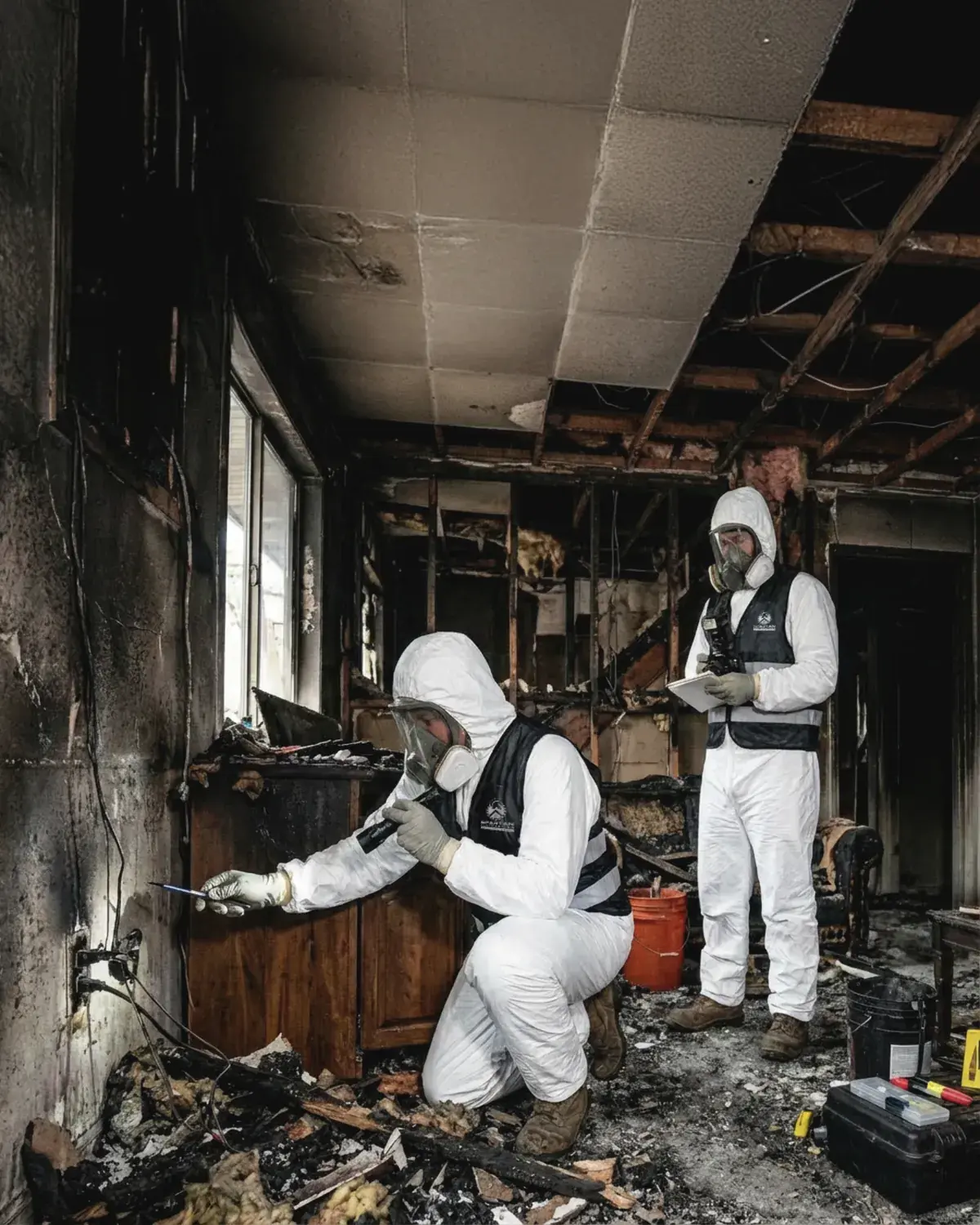
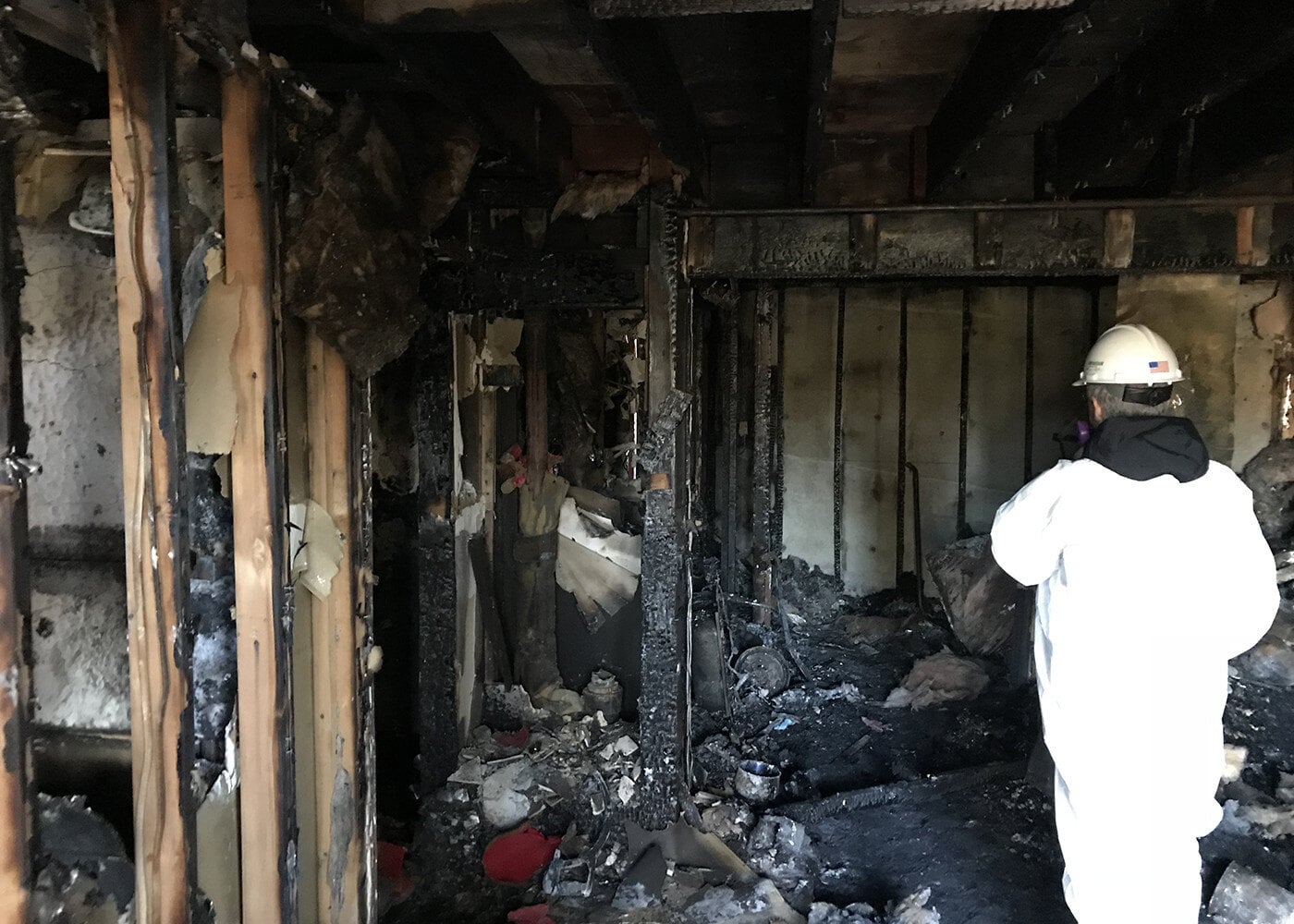
Chimney fires do not always stay in the chimney. Heat can travel through cracked flue tiles into nearby framing, and smoke can be pushed back into the living space.
If firefighters had to spray water into the house, see our post on what is left after a fire for a full picture of what to expect.
Cleaning Up After a Chimney Fire
Cleanup depends on how far the smoke and soot spread.
Soot Removal
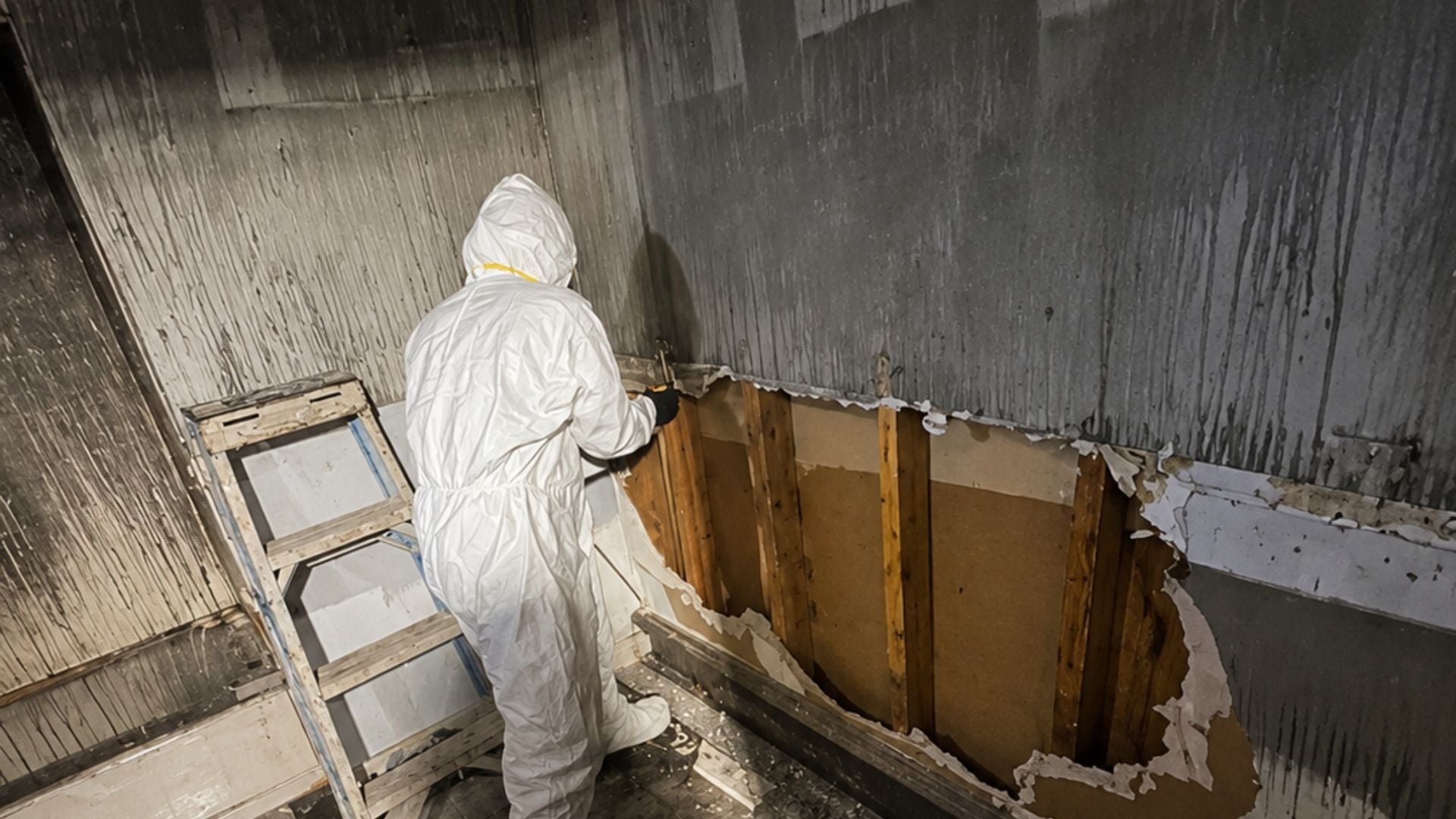
Soot from wood fires is fine and greasy. Wiping it with water first can smear it deeper. Professionals start with dry sponges and HEPA vacuums, then follow with cleaners matched to the residue. Our guide on how to clean up soot after fire damage explains the process.
Odor Removal
Smoke odor settles into drywall, wood, fabrics and ductwork. Treatment may include air scrubbing, thermal fogging or hydroxyl generators. See our post on how to get smoke smell out of a house for more.
Structural Repairs
Charred framing near the chimney may need to be cleaned, sealed or replaced. Masonry and flue repairs are handled by a chimney professional, often by relining the flue.
How to Prevent Chimney Fires
- Have the chimney inspected once a year and swept when needed.
- Burn only dry, seasoned hardwood.
- Build smaller, hotter fires rather than large smoldering ones.
- Open the damper fully while burning.
- Never burn trash, cardboard or wrapping paper.
- Install a chimney cap to keep out animals and debris.
- Keep working smoke and carbon monoxide alarms on every level.
For more fire prevention tips, see our post on fire hazards in the home.
Frequently Asked Questions
Can I use my fireplace after a chimney fire?
Not until a qualified chimney professional has inspected it. Hidden cracks in the flue can let heat and gases reach the house.
How often should a chimney be cleaned?
The common guideline is a yearly inspection, with sweeping whenever creosote buildup is found.
Does a small chimney fire leave smoke damage in the house?
It can. Even if you did not see smoke in the room, residue can work into walls, ceilings and ductwork, especially near the fireplace.
Get Help After a Chimney Fire
After a chimney fire, soot, smoke odor and water from firefighting can affect much more of the house than the fireplace. Spartan Restoration handles soot cleanup, odor removal and repairs across Long Island. Call 631-250-1142 for help.
- Our fire damage restoration services cover cleanup and repairs after any size fire.
- For lingering smoke smells, see our odor removal services.
- North Shore homeowners can learn more about fire damage restoration in Huntington.
Spartan Restoration takes calls 24 hours a day.